
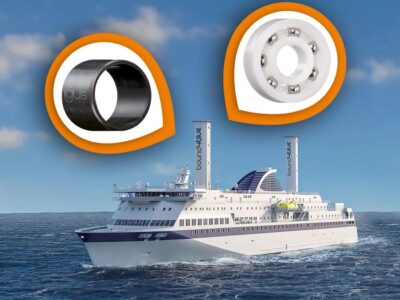
Reducing environmentally harmful emissions from global shipping: with this goal in mind, the Spanish start-up bound4blue has developed a novel propulsion technology – fully automated sails that significantly reduce fuel consumption. Lubrication-free and maintenance-free plain and radial deep groove ball bearings from igus are used.
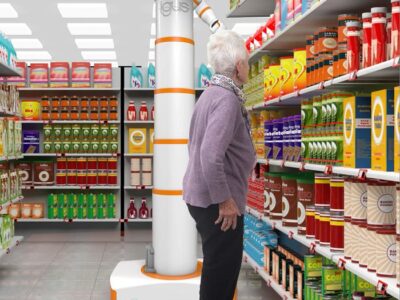
Man, machine – or both? Humanoid robots are no longer science fiction, they are reality. igus has been researching humanoid robotics for some time and is now presenting a prototype of the motion plastics bot at the Hannover Messe: a humanoid robot that combines the advantages of high-performance plastics and Low Cost Automation.

Whether in an industrial environment or in a coffee machine, in order to maximize the service life of a linear guide and to keep the required drive energy low, it is important to reduce friction and wear as much as possible. igus, a motion plastics specialist, has now achieved a breakthrough in tribological plastics: With iglidur E3, igus has developed a new sliding material that has a friction coefficient that is up to 40 percent better and thus opens up design flexibility in linear technology for users for the first time from the classic 2:1 Rule expanded to 3:1.
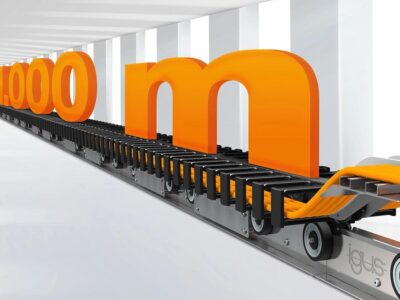
Almost no limits on long travels, high dynamics, long running times – these are the characteristics that distinguish the innovative igus drive-chain. The world’s first energy chain with its own drive ensures significantly longer running times on extremely long travels because hardly any push/pull forces act on it. Across the globe, rail-mounted automated stacking cranes (ASCs) in ports are just one of the applications that benefit.
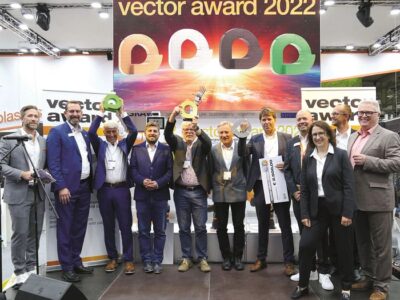
Acoustic walls shift as if by magic. Rows of seats emerge from the floor, ascending step by step like in a cinema. Gepber Szinpad, a Hungarian company, won the 2022 gold vector award with a multifunctional hall that transforms at the touch of a button. The judges at the Hannover Messe named the multifunctional hall the most spectacular energy chain application in the last two years – out of 233 entries from 36 countries.