New PTFE-free 3D printing resin from igus with up to 122 times better wear rate
November 17, 2025
iglidur i2000 is significantly more durable than standard printing materials and ideal for use in medical devices
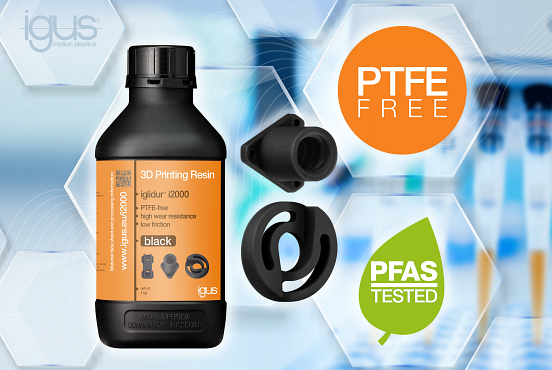
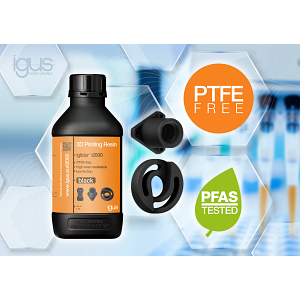
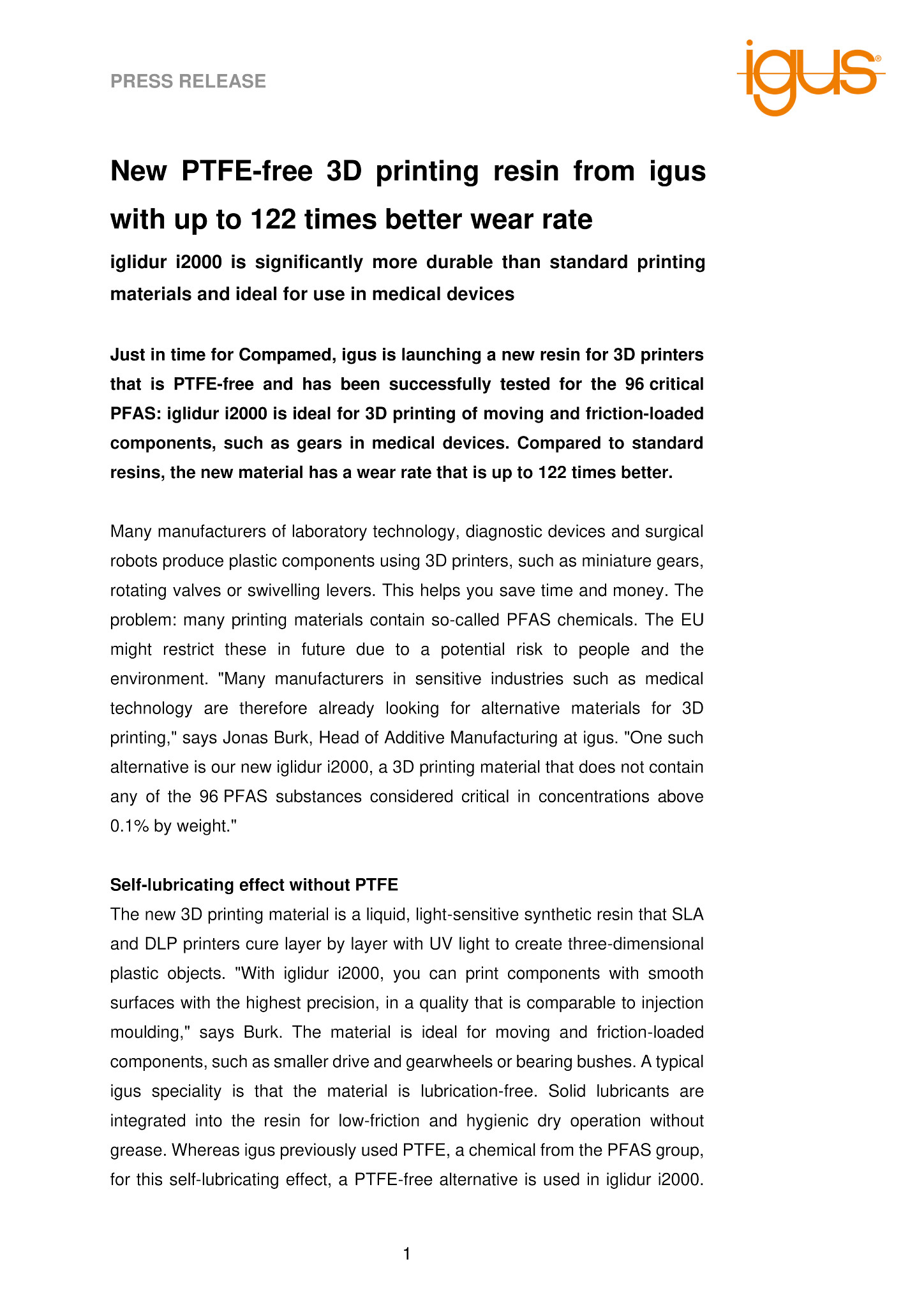
Many manufacturers of laboratory technology, diagnostic devices and surgical robots produce plastic components using 3D printers, such as miniature gears, rotating valves or swivelling levers. This helps you save time and money. The problem: many printing materials contain so-called PFAS chemicals. The EU might restrict these in future due to a potential risk to people and the environment. “Many manufacturers in sensitive industries such as medical technology are therefore already looking for alternative materials for 3D printing,” says Jonas Burk, Head of Additive Manufacturing at igus. “One such alternative is our new iglidur i2000, a 3D printing material that does not contain any of the 96 PFAS substances considered critical in concentrations above 0.1% by weight.”
Self-lubricating effect without PTFE
The new 3D printing material is a liquid, light-sensitive synthetic resin that SLA and DLP printers cure layer by layer with UV light to create three-dimensional plastic objects. “With iglidur i2000, you can print components with smooth surfaces with the highest precision, in a quality that is comparable to injection moulding,” says Burk. The material is ideal for moving and friction-loaded components, such as smaller drive and gearwheels or bearing bushes. A typical igus speciality is that the material is lubrication-free. Solid lubricants are integrated into the resin for low-friction and hygienic dry operation without grease. Whereas igus previously used PTFE, a chemical from the PFAS group, for this self-lubricating effect, a PTFE-free alternative is used in iglidur i2000. “Users can therefore print components as usual without having to worry about PFAS regulations,” explains the 3D printing expert.
122 times more wear-resistant than standard resin
iglidur i2000 proves to be extremely resilient and durable. A flexural strength of 74MPa ensures stability while a Shore D hardness of 80 guarantees high resistance to wear. The material is also thermally robust. It can withstand continuous temperatures from -20°C to 100°C and even up to 140°C for short periods. In the test laboratory iglidur i2000 was able to demonstrate its high wear resistance. A stainless-steel test specimen moved over the resin surface at a speed of 0.5m/s and with a surface pressure of 1.4MPa. “The wear rate fell from 63.97µ/km with a standard resin to just 0.52µ/km. This corresponds to an improvement by a factor of 122,” emphasises Burk. “These values emphasise the exceptional durability and abrasion resistance of the PTFE-free 3D printing material i2000 under high mechanical loads.”
Find out more about the new resin: iglidur® i2000, 3D printing resin