From marine plastic to mobility: igus presents an e-bike made of recycled plastic for the first time
June 29, 2026
igus is presenting an electrified version of the low-maintenance igus:bike made from recycled fishing nets at the Eurobike in Frankfurt
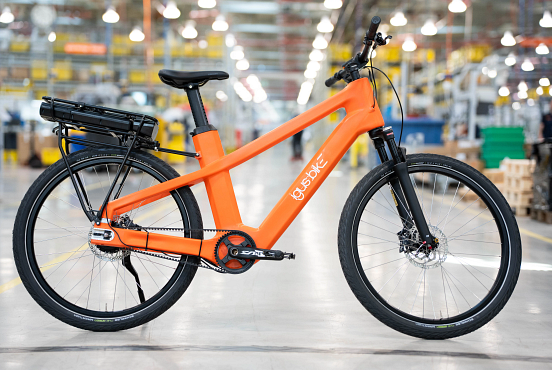
igus continues to drive forward the vision of sustainable urban mobility. At the Eurobike trade show, the company is presenting an electric version of its igus:bike for the first time, responding to the growing demand for low-maintenance e-mobility in cities. The previous model has already proven its robustness on a 1.5-year world tour in wind and weather. The tried-and-tested plastic bicycle has been continuously enhanced and forms the basis for the new electric bicycle. Like the igus:bike, it consists of 50 per cent recycled fishing nets and offers people the opportunity to combine environmental protection with low-maintenance urban mobility. And all this at a reasonable price of €2,500.
Congested roads and bad air: more and more people in cities want to switch from cars to bicycles to get from A to B faster and reduce CO2emissions. Around every second newly purchased bicycle in Germany is now an e-bike, according to a market analysis by the management consultancy EY. “We are convinced that we are launching an e-bike that is not only particularly durable, but also fits in with the idea of circular economy. With the electric version of our igus:bike, we are responding to the increasing demand,” says Jens Boldt, Head of the igus:bike Business Unit at igus. Boldt and his team are inspired by the igus:bike world tour, which took the bike across 25 countries. The plastic bike has covered almost 6,000km and proven its durability in various climate zones in wind and weather. “The tour provided us with valuable insights. Many components have already shown their robustness under real conditions in everyday life. This experience went into the development of the e-bike. We are using this ongoing practical experience to continuously enhance both the igus:bike and the e-bike. All components are also put through their paces in our in-house test laboratory before use,” explains Boldt.
The new e-bike is made of 50 per cent plastic, from the bicycle frame to the wheels and the seat post to the handlebars. Metal is only used whenever it is still technically necessary, e.g. for the suspension fork, brake discs and brake cables. The igus e-bike is designed for urban traffic: the single-speed e-bike weighs around 20kg and works with a 60Nm rear-wheel motor and a toothed belt made of carbon fibres and plastic. The battery allows a range of up to 120km. Series production will start in the third quarter of 2026. The igus e-bike will be available for around €2,500. igus is also planning a non-electrified variant with an eight-speed gear hub.
Protecting the seas while cycling
According to the environmental organisation WWF, around a third of the world’s plastic waste in the seas consists of fishing gear such as nets and ropes. To reduce this amount of waste, igus works with a Belgian partner to produce the igus:bike. They collect nets that fishing boats have lost near the coast, clean them and process them into plastic powder. “Our materials scientists have managed to ensure that 50 per cent of the plastic for bicycle frames can be made of this recycled material,” says Boldt. For production, igus relies on a special process that was already used in the predecessor and can produce seamless and robust hollow bodies. “However, we have refined the process to such an extent that the frame now shows a higher stiffness. This allowed us to reduce the wall thicknesses and make the frame design much slimmer.” A characteristic feature is the new design with seat and chain stays on both sides, which gives the orange and black bike a distinctive look. igus manufactures other components such as seat posts and handlebars via injection moulding.
Low-maintenance in urban traffic
When people are out and about in the city, they regularly leave their bikes in the rain, for example while they go to the supermarket. Components such as the chain, seat post, spokes and welds on the frame often rust. The result: owners have to clean parts at great expense, maintain them regularly or even replace them completely. Especially with high-quality bicycles or e-bikes, this can add up to considerable sums. “The igus:bike, in contrast, is almost maintenance-free,” emphasises Boldt. It can stand in the rain for years without corroding. In addition, it does not require any maintenance at the bearing points. igus uses lubrication-free plain bearings made of high-performance plastic, e.g. on brake levers, pedals and dampers. Integrated, microscopic solid lubricants ensure low-friction dry operation in the long term without lubricating oil.